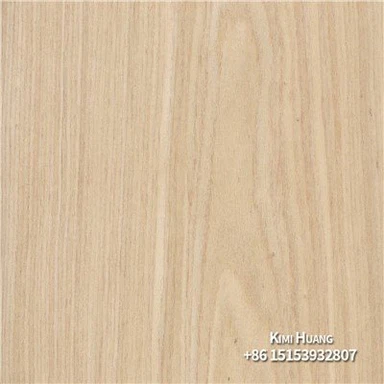

How to choose natural bark
Jun 02, 2022
1. The wood veneer manufacturer teaches you how to look at the production and manufacturing quality: the identification of the production and manufacturing quality of natural wood veneer, and whether the inclined knife lines, uneven burrs, air pollution and damage can be clearly seen on the surface of non splicing wood veneer; Whether the thickness is uniform and ensure the thickness of the mark; Whether the overall width specification and model conform to the marked specification and model. In addition to checking the above conditions, the splicing skin should also pay special attention to whether the splicing is tight or away from the gap. If there is no cloth or paper pasted with wood veneer, it is also necessary to check the tensile strength and color fastness to washing of wood veneer and wood-based panel without cloth or printed pictures. All normal wood-based panels can not be torn off the wood veneer and non anti cloth or paper. In addition, the non anti cloth or paper on the back should be flat without wrinkles.
2. Materials from the east to the West: - depending on the closeness of the materials, the materials of different green plants can be divided into tight and loose sizes. The tight wood skin lines of the materials are fine and smooth. The tensile strength of the construction is good. The output of the finished products is as low as possible when painting. On the other hand, the rough wood veneer of the material has poor gloss, which is easy to be broken during the whole construction process. After the construction, the product output and paint consumption are also large. Second, look at the defects of the material. If there are many knots and shadows in the wood veneer, there are wormholes and insect tracks, rotten and discolored, and there are also epoxy resin glue and skin clips, it indicates that the wood veneer material is weak.
3. Look at the color of the product: the color of high-quality wood skin is fresh and tender, even everywhere, with some sub smoothness of wood, without obvious natural color deviation or decay and fading. The basic colors of the bark of different green plants are: red (pink, orange red, naked pink, brown red, etc.), yellow (brown yellow, milk yellow, zongzi color, etc.), white (white) Brown (brown black, brown, etc.).
4. Look at the product lines: the lines of natural wood skin are generally divided into straight lines and mountain lines. A good mountain pattern should have heavy grain responsibility, clear diversity, different affinity, harmonious changes and appropriate specifications, and should not produce half mountain patterns or the straight lines on both sides are too wide; A good straight line should be straight and fine at the end of the tree ring line, which is suitable for different intimacy and estrangement, without half mountain lines or distorted lines.
5. Look at the actual thickness: the thickness of the veneer is an important indicator of the texture of the veneer. The choice of thickness should be investigated by consumers according to the actual needs of the level of application and consumption. After the construction of thin skin building, the solid wood plate has strong texture, and the solid tensile strength of thin skin is weak. In addition, its solid tensile strength is not as good as that of thin skin.
6. Touch the wet area: the dry area of wood veneer is called moisture content professionally. If you feel wet, it means that the moisture content of natural wood veneer is high. If it is not produced and processed only by sticking panels, it should not be used immediately and must be dry. If it is easy to crack when it is good at concavity, it means that the water content is low. High quality wood veneers are sold in the market, and the moisture content is within the range of 8-24% as far as possible.