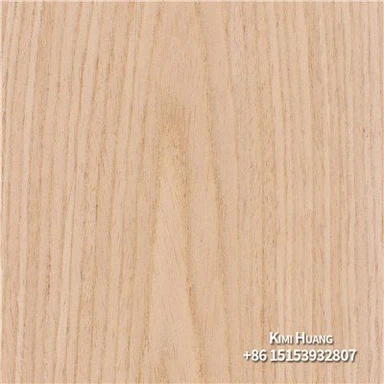

What is the difference between Dyed Veneer and natural veneer?
Jun 04, 2022
With the wide use of veneer veneer products and the development trend of the sales market, Dyed Veneer gradually evolved, but many people do not know this kind of colored veneer. Now, let's discuss together: what is the difference between the processing technology of dyed wood veneer and natural wood veneer? What problems should be paid attention to in the whole process of using glue for Dyed Veneer?
Natural bark
Natural veneer is a kind of pure natural wood. It has pure natural lines and colors without human decoration. It is used in all ceramic veneer decorative design of furniture and other commodities. Using natural wood veneer to carry out all ceramic veneering processing has the same appearance and practical effect as these solid wood furniture, but natural wood veneer also has some shortcomings, such as color deviation, scab, round hole, etc.
Some people like this natural defect. Because the texture and color of the natural wood veneer cannot be changed, it has the natural beauty and the initial sense of plastic arts. The natural wood veneer decoration design makes the interior space of all household furniture both antique and grand in the furniture and room, reflects the elegance of the home owner, and creates a warm meaning of returning to nature for the home.
dyed veneers
The dyed veneer is generally based on the natural veneer with fewer defects, and is obtained by using new technology to color the natural veneer; There are also some whole wood after coloring, which is called colored wood. The veneer produced and processed from this kind of colored wood is also Dyed Veneer.
The pure natural solid wood veneer is colored to solve the problem, which preserves the original natural sense of hierarchy and lines of pure natural wood. In the whole process of production and processing, it fills the shortcomings of natural wood veneer, such as color bias and single color. At the same time, it can also generate new fashionable and novel styles according to the change of color tone, so that customers can have a large number of choices.
Dyeing veneer is generally applied in the ways of double board coloring, solid wood board coloring and standing wood coloring.
To put it bluntly, double plate coloring means that the rotary cutting machine or planing double plate is uniformly colored by dipping method, and the thickness of double plate is generally 0.2~1mm. The colored double panels can be used as raw materials for all ceramic veneers of artificial panels, all ceramic veneers of furniture and artificial synthetic simulation wood.
Solid wood board coloring refers to the surface and internal coloring of solid wood board. In the production and manufacturing of solid wood board processing technology, the interior of solid wood board (the color depth exceeds 1cm) must be colored. Because of the high thickness of the solid wood board, it is difficult for the dye under the basic standard to penetrate, so it is necessary to use the pressure relief pressure impregnation coloring or steaming method to solve the coloring.
Thirty and tree coloring refers to the way in which the sap fluidity caused by the respiration of SAP plants is used as a pure natural driving force to disperse the dye solution to the dry matter of flowers, plants and trees, so as to color the wood. The application of this method is not only faster, but also the colored wood can recognize the coloring of micro structures and maintain a good level.
Common problems of glue for dyeing wood veneer
The dyed veneer is easily cracked and discolored in the whole process of edge banding due to the production and processing of staining and color modification. Therefore, the quick drying high-quality veneer adhesive is applied to reduce the damage to the veneer.
Seeing here, I firmly believe that we all have a certain grasp of the characteristics of natural veneer and dyed veneer. The texture of natural veneer cannot be changed, and it has a pure natural artistic beauty. However, dyed veneer can dye the natural veneer with different colors according to the dyeing treatment process, so as to meet the requirements of different customers.